

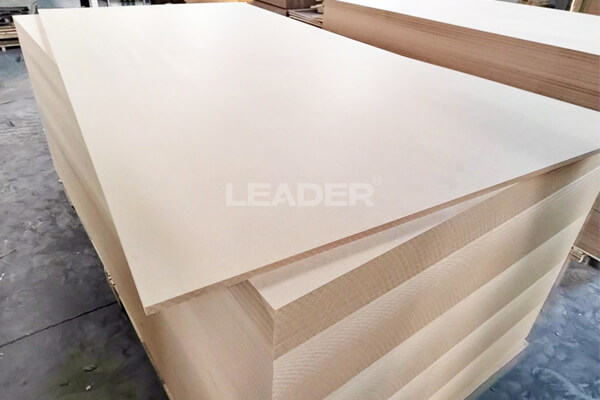
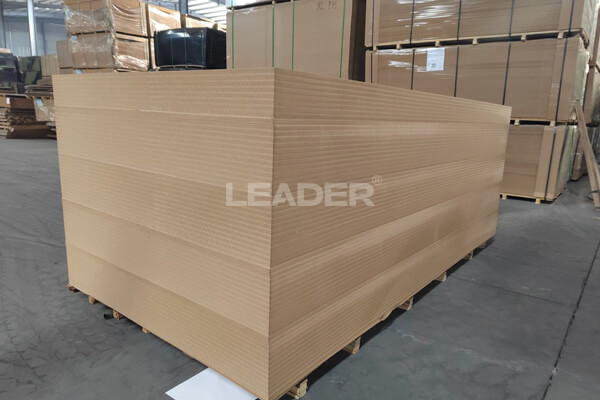
FIBERBOARD 4x8x18MM PLAIN
Detailed Specifications
Fiberboard has a wide range of applications, primarily in:
Furniture Manufacturing: Used for the carcases, shelves, and doors of cabinets, wardrobes, bookcases, tables, and bed frames.
Interior Decoration: Used as wall panels, room dividers, ceiling tiles, baseboards (skirting boards), and door cores.
Construction Industry: Used for floor underlayment, roof sheathing, and concrete formwork.
Other Applications: Used for making picture frames, display racks, toys, speaker boxes, and as a substrate for veneers and laminates.
The main advantages of fiberboard include:
Cost-Effective: Significantly cheaper than solid wood, making efficient use of wood waste and mill residues, offering great economic value.
Smooth & Uniform Surface: Has a homogeneous structure with no knots, grains, or natural defects. It provides an excellent, smooth surface for painting, veneering, or laminating.
Easy to Work With: It is easy to cut, drill, machine, carve, and shape, making it ideal for mass production and detailed designs.
Dimensional Stability: Less prone to splitting, cracking, or warping compared to natural wood.
Environmentally Friendly: Primarily made from wood waste and sustainably sourced wood chips, promoting efficient utilization of wood resources.
(Note: A key disadvantage is its poor moisture resistance. Standard fiberboard can swell when exposed to water, making it unsuitable for humid areas unless specially treated (e.g., Moisture-Resistant MDF or Exterior Grade).)


