Four common defects of eucalyptus veneer
author: LINYI LUJU INC
2024-05-28
Four common defects of eucalyptus veneer
The first is knots, knots are divided into live and dead knots, dead knots have a greater impact on the quality of veneer. In addition, the number, size, location and distribution of knots will also have a certain impact on the quality of the veneer.Among them, the knots are more obvious in young timber. Some scholars have studied several eucalyptus species and found that the size of live knots of Eucalyptus tails is the smallest.
Eucalyptus willow eucalyptus has the largest size of live knots; in addition, in different densities of Eucalyptus dunnii, the size of the live knots and the density of the forest stand show a negative correlation. Significant differences were found among the tree species in terms of dead-node defects. Among them, the overall number of rough-skinned eucalypts and tailed giant eucalypts were at the top.
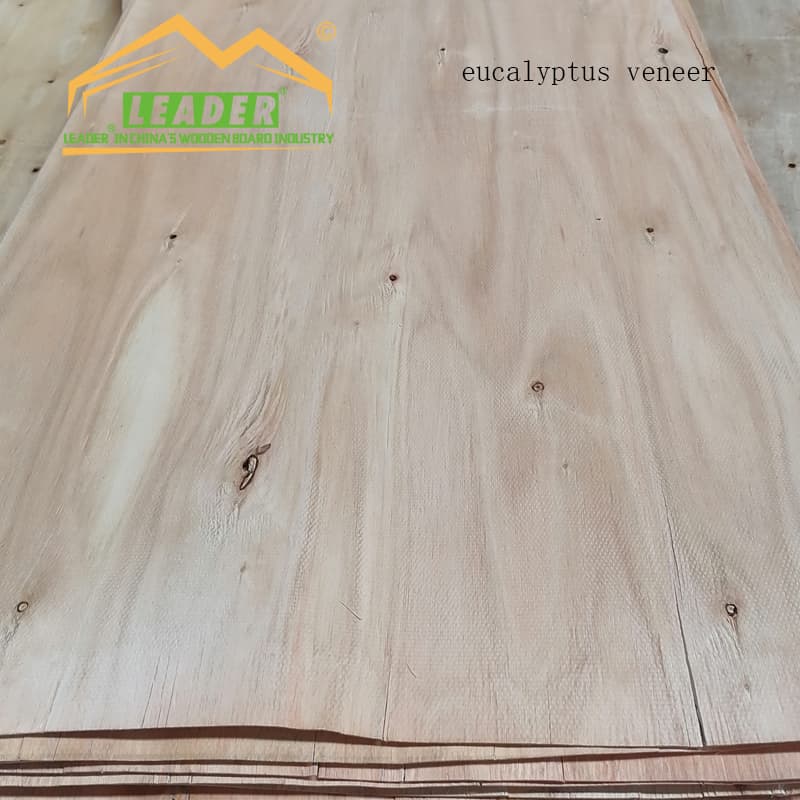
The second was defective holes. Holes are formed by the shedding of knots during the veneer harvesting and rotary cutting process or drying process, which will cause serious impacts on the subsequent gluing performance and so on, and is one of the main factors affecting the quality of veneer. Because of the difference between the texture of the knots and the normal part, so in the process of rotary cutting, the number of holes formed by the shedding of knots will be different between different tree species. Some people have compared six types of eucalyptus and found that, in terms of the number of holes in different veneers, Eucalyptus globulus has the largest mean value of 4.25 holes, Eucalyptus coarsely skinned is slightly better, 2.25, Eucalyptus tailed, Eucalyptus willow, Eucalyptus grandis and Eucalyptus dunnii have performed well, with a mean value of less than one.
The third is defective cracking. Cracking is mainly divided into three categories: external cracks, internal cracks and end cracks, external cracks, also known as surface cracks, mainly occur in the pre-drying period of the wood, and to a certain extent can be closed in the middle and late stages of the process, which has a relatively small impact on the quality of veneer. Internal cracks, also known as honeycomb cracks, due to the cracking of the shape of the honeycomb and the name. It is mainly caused by improper processing conditions in the pre-drying stage, which seriously affects the quality of wood and occurs less frequently.
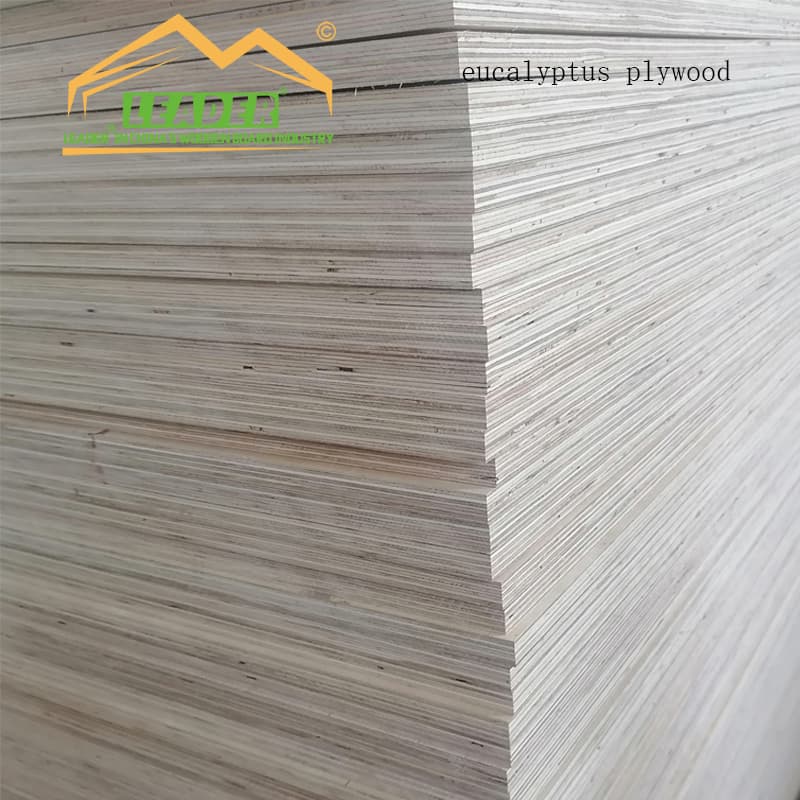
The most important cracking situation in the actual production process is end cracking, which occurs at both ends of the log, because eucalyptus has a large growth stress, which brings higher growth and greater density, but also increases the difficulty of the harvesting process - due to the release of growth stress, resulting in end cracking, splitting and deformation of the log, which affects the quality of the rotary cut veneer. quality and significantly reduce the timber yield. In addition, mechanical breakage during wood processing is also an important cause of veneer cracking.
The fourth is defective wrinkles. Crumpling, also known as routing, mainly occurs in the period of wood drying, eucalyptus in the drying of wrinkles are very easy to occur, destroying its intrinsic strength, reducing the wood utilisation, crumpling will increase the rate of wood shrinkage, the loss of 5% ~ 10% of the effective volume of timber, and the impact of timber leading to deformation, cracking, and so on, and when it is severe, even scrapped boards.
High-Quality Plywood Solutions from LINYI LUJU INC
Possibilities for Waste Wood Products
Related Article


Discover how Leader provides high-quality engineered wood products and construction products for buildings, furniture manufacturing, and global building material distribution.
Leader: Your Trusted Partner for Engineered Wood Products and Construction Products

